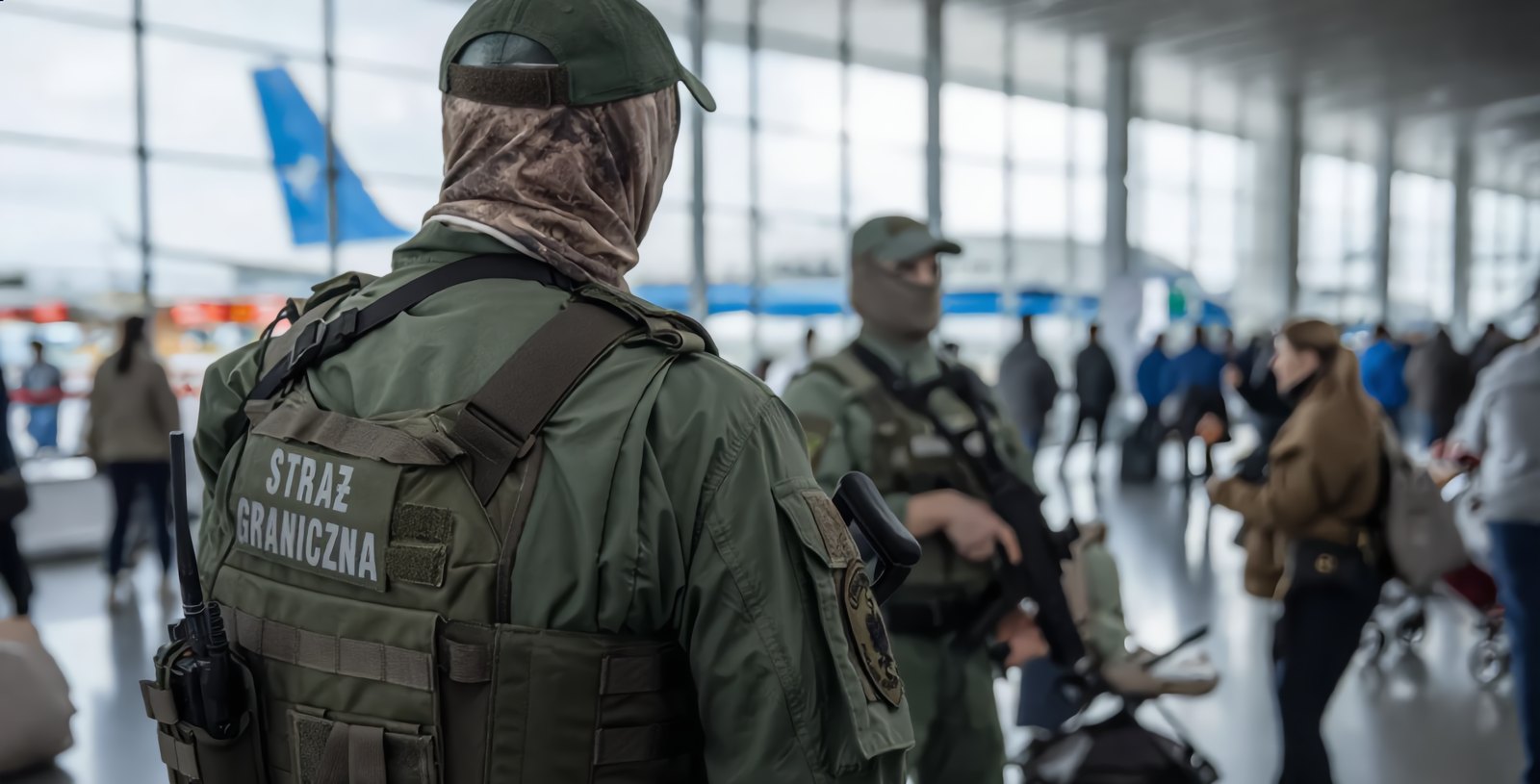
On 7 August 2026 a regulation was published in the Journal of Laws that closes one of the most frequently used employment "loopholes": citizens of Venezuela, Georgia and Colombia will no longer be able to work in Poland on the basis of a work permit if they are staying here solely under visa-free travel. Below we explain exactly what is changing, who is affected, how the Polish labour market looks against this backdrop and which legal employment paths remain.
- What the regulation introduces (legal basis and dates)
- Whom and what the ban covers — and what it does not
- The Polish labour market: how many foreigners there are and how many workers are missing
- Why these three countries in particular — economy, security, politics
- What to do: legal work paths and risk assessment
- Legal basis and sources
1. What the regulation introduces
This concerns the Regulation of the Minister of Family, Labour and Social Policy of 31 July 2026 on the list of states whose citizens holding a work permit are not entitled to perform work while staying on the territory of the Republic of Poland under visa-free travel (Journal of Laws 2026, item 1072). The act was issued on the basis of Article 3(4) of the Act of 20 March 2025 on the conditions of admissibility of entrusting work to foreigners on the territory of the Republic of Poland (Journal of Laws 2025, item 621).
The text is short and fits into three sections:
- § 1 — citizens of the Bolivarian Republic of Venezuela, Georgia and the Republic of Colombia are not entitled to perform work on the basis of a work permit while staying under visa-free travel;
- § 2 — transitional provision: persons from these states who started work under visa-free travel before the regulation entered into force may continue it under the existing rules until the end of the permitted visa-free stay;
- § 3 — the regulation enters into force 14 days after the date of its publication.
2. Whom and what the ban covers — and what it does not
This restriction is not a ban on entry or stay. Citizens of Venezuela, Georgia and Colombia may still come to Poland under visa-free travel (a stay of up to 90 days in any 180-day period), provided the EU rules on visa exemption do not change. One thing changes, but a key one: visa-free stay alone ceases to be a title that allows one to work legally on a work permit.
The ban does not cover work performed on another, "stronger" residence basis, in particular:
- on a national type-D visa (e.g. a visa for the purpose of performing work),
- on the basis of a temporary residence permit and the residence card issued on its basis (including the single permit — for temporary residence and work).
The logic of the provision is therefore this: visa-free travel is meant to serve short stays (tourism, family visits, business), not earning a living; a foreigner's work should be tied to a more formalised residence title.
3. The Polish labour market: how many foreigners there are and how many workers are missing
The change comes at a time when the labour market is still tight and the economy strongly benefits from foreign labour. The key figures (data from the Social Insurance Institution (ZUS) and Statistics Poland (GUS) at the turn of 2025/2026 and in the first half of 2026):
- over 1.3 million foreigners are registered with ZUS — about 8% of all insured persons; over the year their number rose by about 95,000;
- the largest groups are citizens of Ukraine (about 857,000) and Belarus (about 139,000); Georgians number about 26,000 insured persons — the third-largest group;
- registered unemployment in July 2026 stood at about 5.9% (about 907,000 people on the registers), and under the Eurostat definition Poland has one of the lowest unemployment rates in the EU (about 3.1%);
- at the end of the first quarter of 2026 there were about 100,000 job vacancies in Poland; the most vacancies concern specialists, machine operators and assemblers, and service workers.
Foreigners — including, until now, citizens of Colombia, Venezuela and Georgia — filled the gap especially in construction, transport, logistics, agriculture, services and simple manufacturing. These are jobs that some domestic workers do not take up because of the conditions, prestige or pay, and not because there are physically "no" willing candidates.
4. Why these three countries in particular — economy, security, politics
The selective choice of states means the regulation is hard to explain by the labour-market situation alone. In public debate at least three ways of reading this decision clash; we present them as the positions of the parties, not as our own assessment.
The security and public-order argument (the government's side)
The Ministry of Labour and the Ministry of Foreign Affairs point out that visa-free travel was systemically misused — for earning a living while bypassing the requirements, which fostered illegal stay and illegal entrustment of work. Data on the scale of the phenomenon is cited: the number of work-legalising documents issued to Colombian citizens rose from about 12,300 (2023) to about 40,400 (2024), and inspections revealed a high proportion of illegal work; in the case of Georgia, the theme of crime and human smuggling is raised. This fits into the migration strategy announced in October 2024 and the general tightening of policy (fewer visas, fewer new permits, more returns).
The economic argument (the employers' side)
Employers' organisations point out that, with sustained demand for workers and a high number of vacancies, cutting off yet another channel of inflowing labour may curb growth and deepen shortages in sectors dependent on migrants. On this view the regulation is sometimes assessed as "short-sighted" in relation to the needs of the economy.
The political and electoral thread
Commentators also advance the thesis that such tough signals in migration policy serve as a political message aimed at part of the electorate afraid of competition in the labour market and of the growing presence of foreigners. This should be treated as an interpretation present in the debate, not a provable fact: the regulation itself refers to public-order and security grounds, not to the electoral calendar. A sound assessment requires separating three orders — the legal (what the provision says), the economic (what effect it has on the market) and the political (how the decision is communicated).
5. What to do: legal work paths and risk assessment
For employers and foreigners from the three affected states, the key is to switch from the "visa-free + work" model to a residence title that permits work. Possible solutions:
Do you employ citizens of Colombia, Georgia or Venezuela?
We will review your employment model and select a safe path — a national visa or a residence card via MOS — so that no gap in the legality of work and stay arises.
Message us on WhatsAppor call: +48 539 999 549
Legal note: this article is informational and does not constitute legal advice. Legal state: August 2026 (Journal of Laws 2026, item 1072; the Act of 20 March 2025, Journal of Laws 2025, item 621; the Act of 12 December 2013 on Foreigners). Every case is different — consult a lawyer before making a decision. Data controller: Dariusz Włodarczyk Kancelaria TRC.
Sources: Regulation of the Ministry of Family, Labour and Social Policy of 31 July 2026 (Journal of Laws 2026, item 1072); Article 3(4) of the Act of 20 March 2025 on the conditions of admissibility of entrusting work to foreigners (Journal of Laws 2025, item 621); labour-market data: Statistics Poland (GUS), "Demand for labour" and the Ministry of Family, Labour and Social Policy; data on insured persons: ZUS. It is worth verifying the figures and dates in the current announcements of these institutions before taking action.